
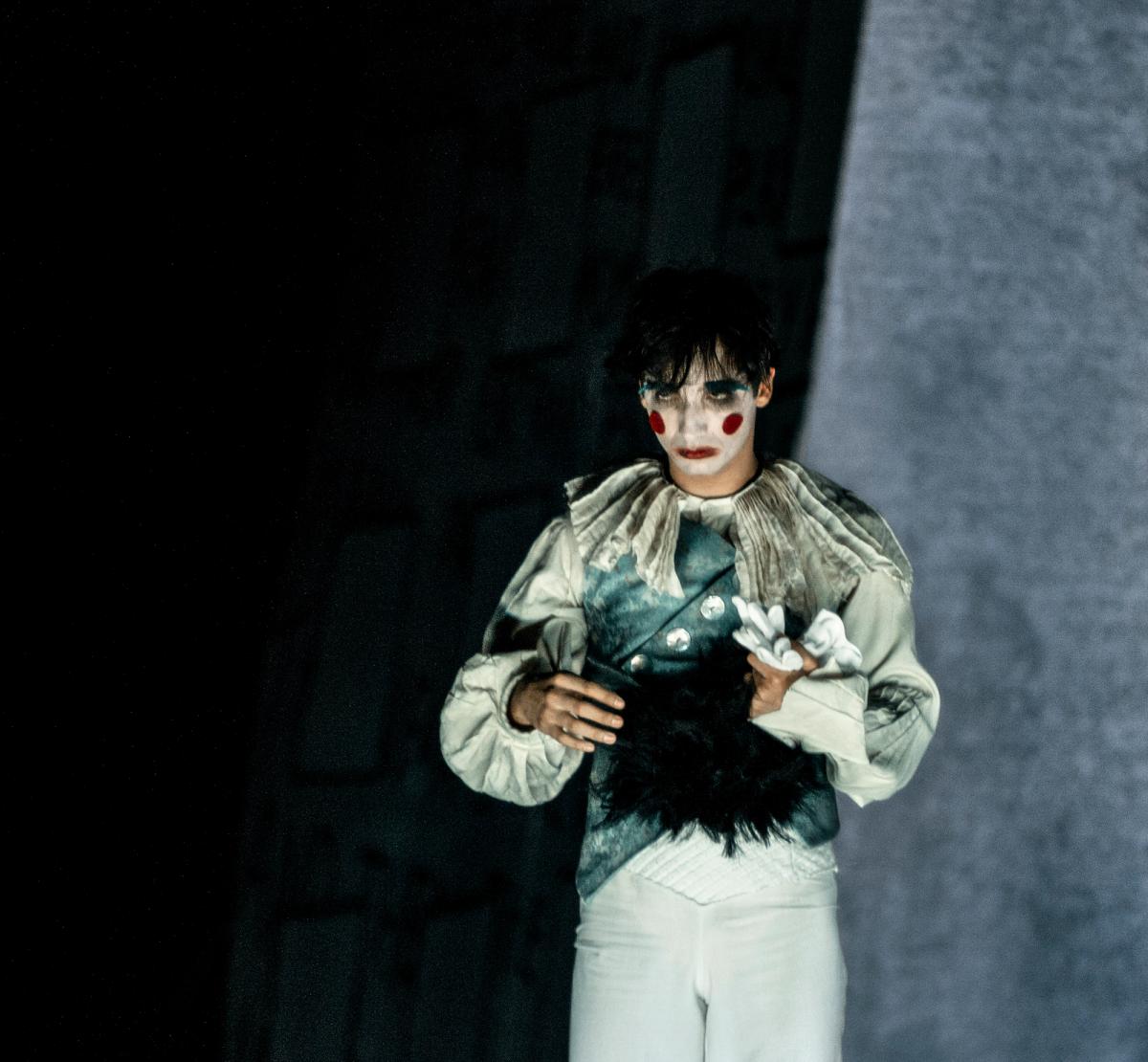
Created for the Norwegian National Ballet’s season-opening bill I Fokines verden (In the World of Fokine), Petrusjka was Alan Lucien Øyen’s re-imagining of the ballet that helped break dance into the modern age in 1911. Keeping Stravinsky’s score and Fokine’s puppets but replacing the Russian fairground with a whole city of players, it was danced by the full company with Daniel Proietto in the title role, inside a wooden “world theatre” by Åsmund Færavaag, with costumes by Stine Sjøgren and lighting by Geir Hovland.
All the world’s a stage, and all the men and women merely players.
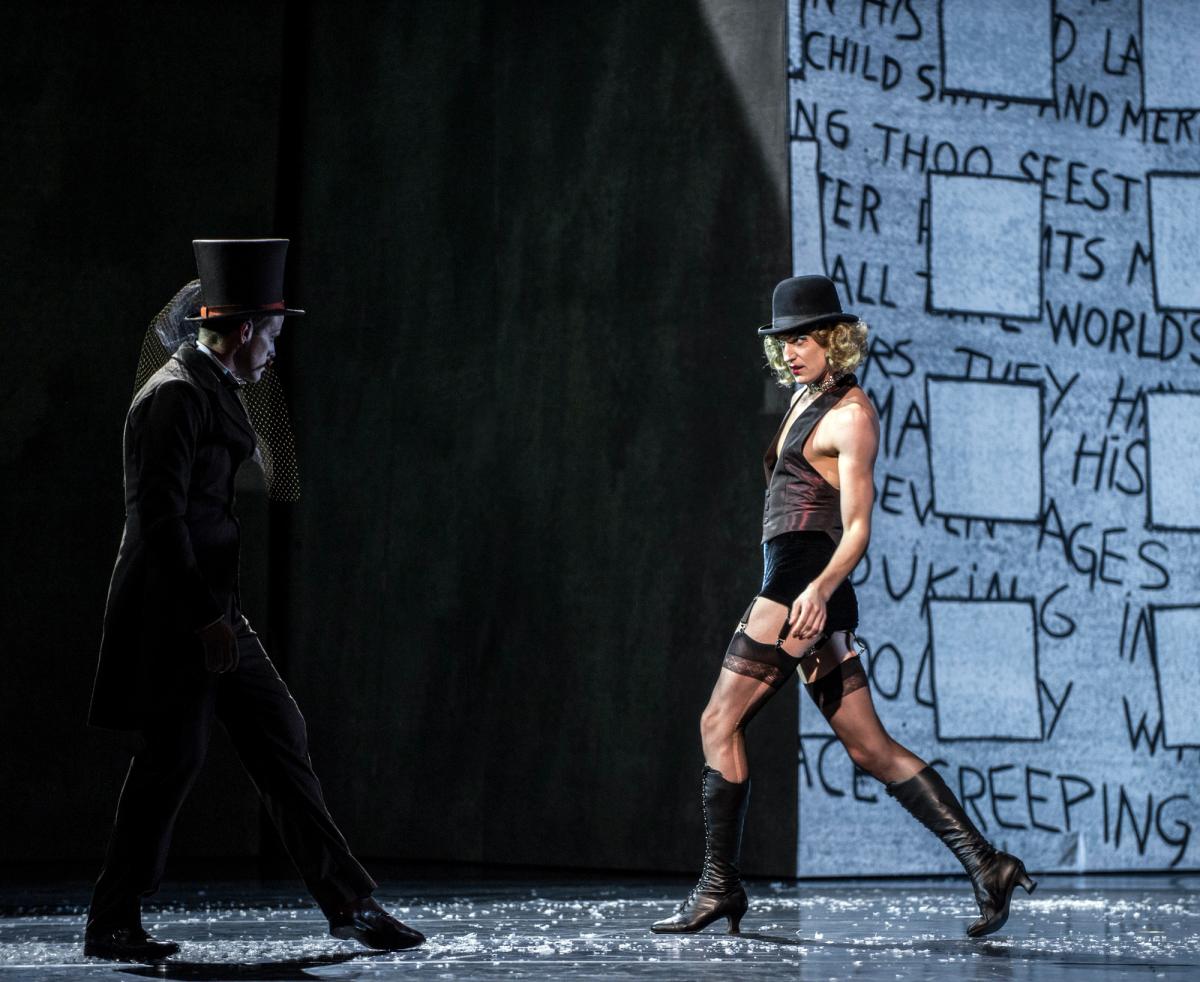
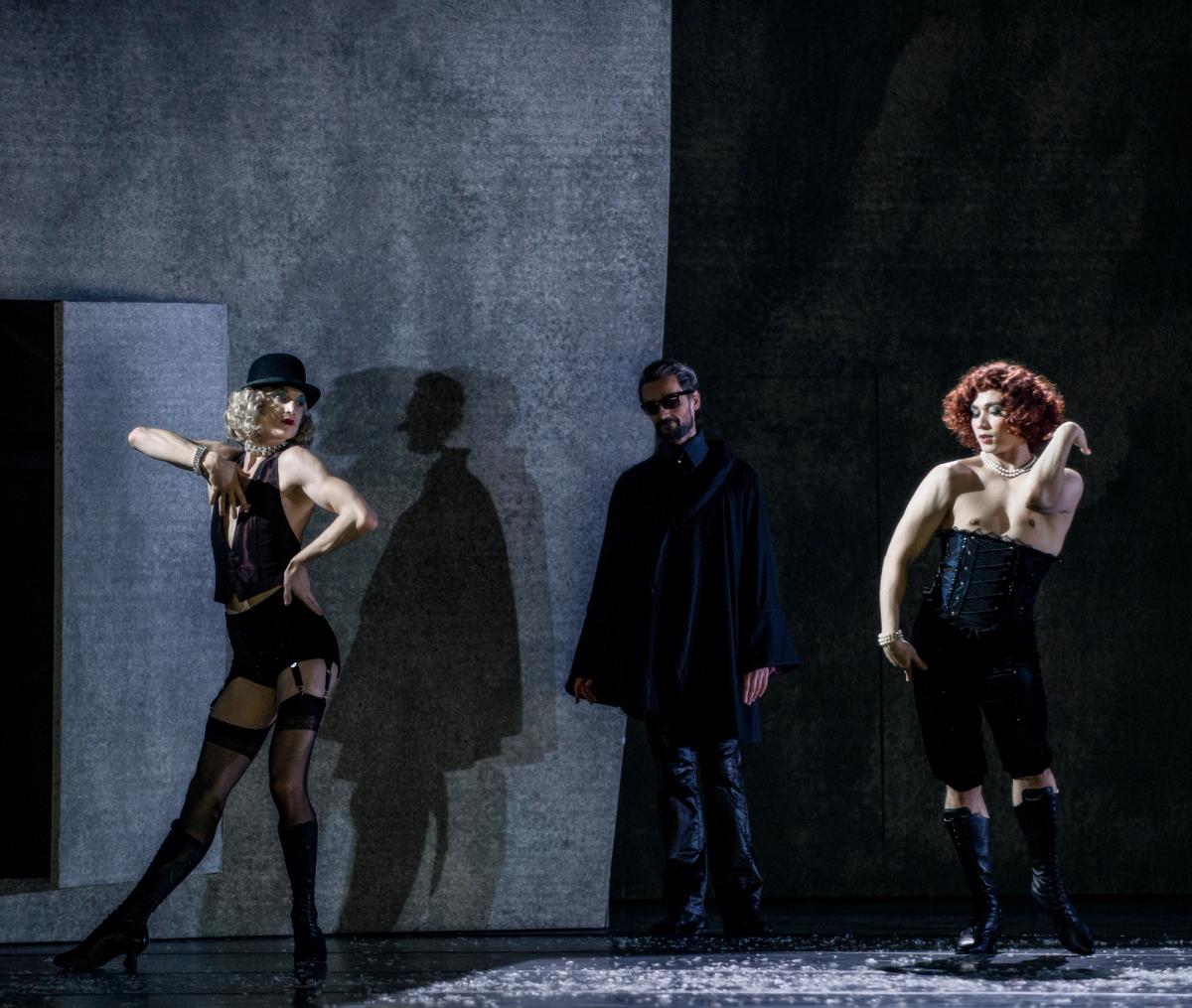
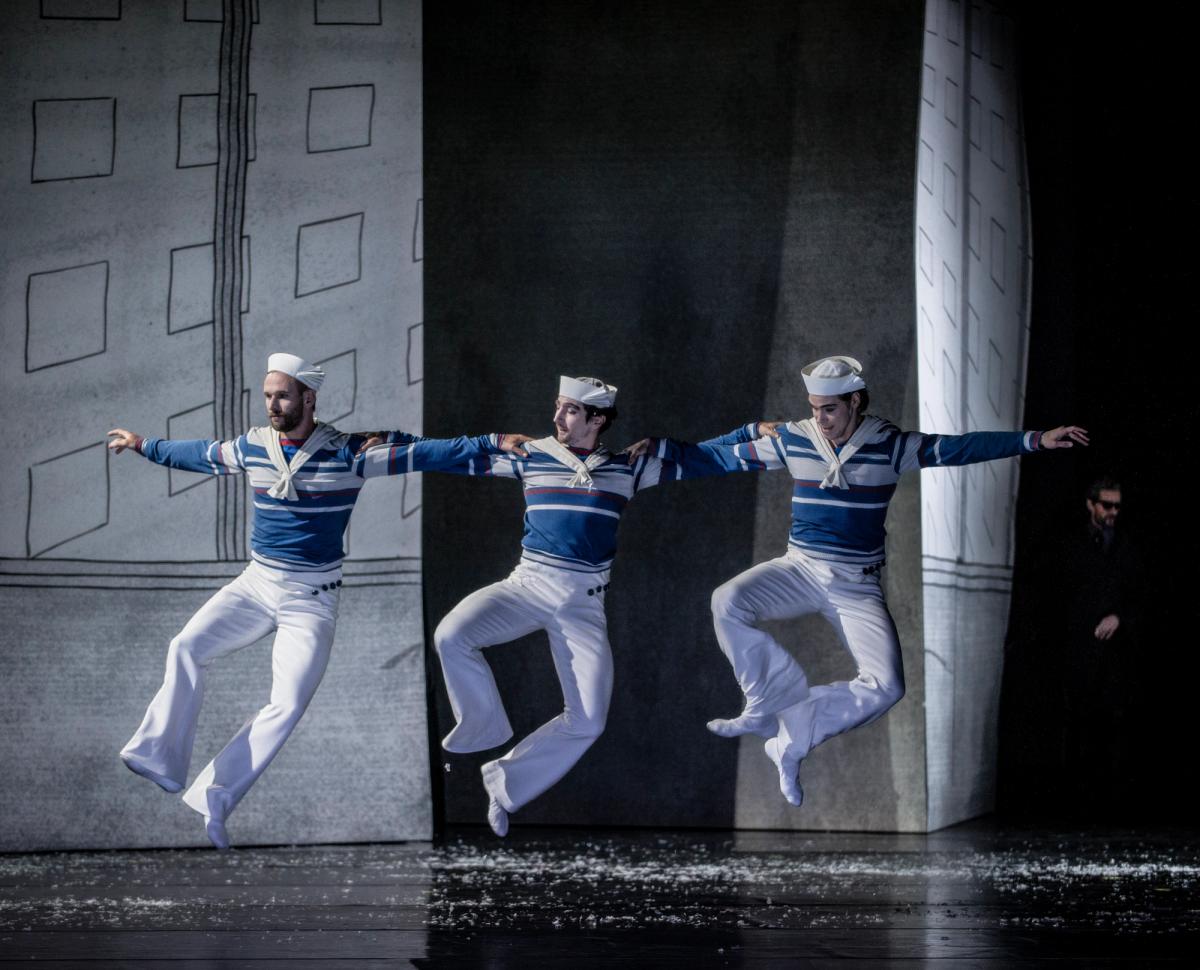
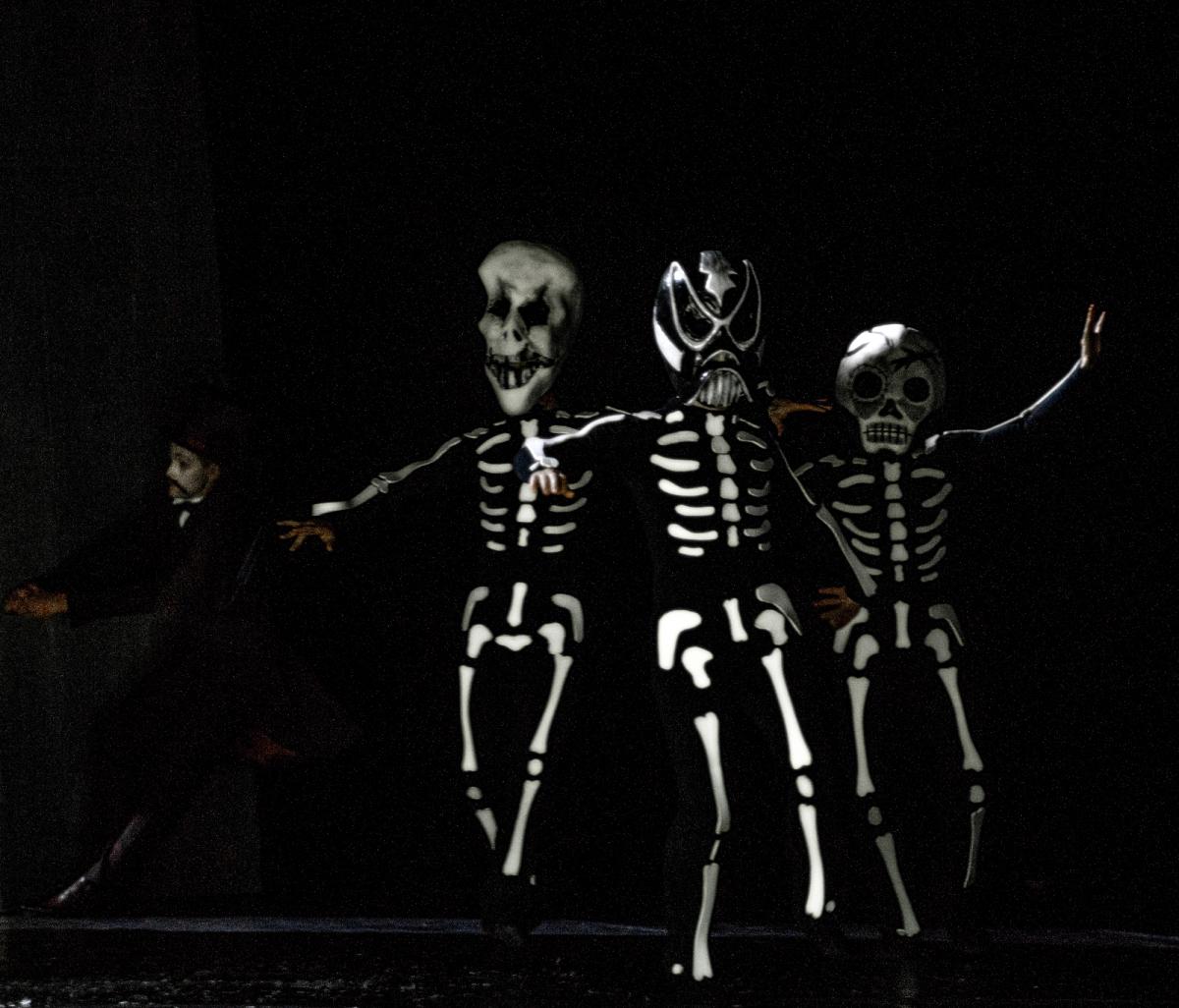
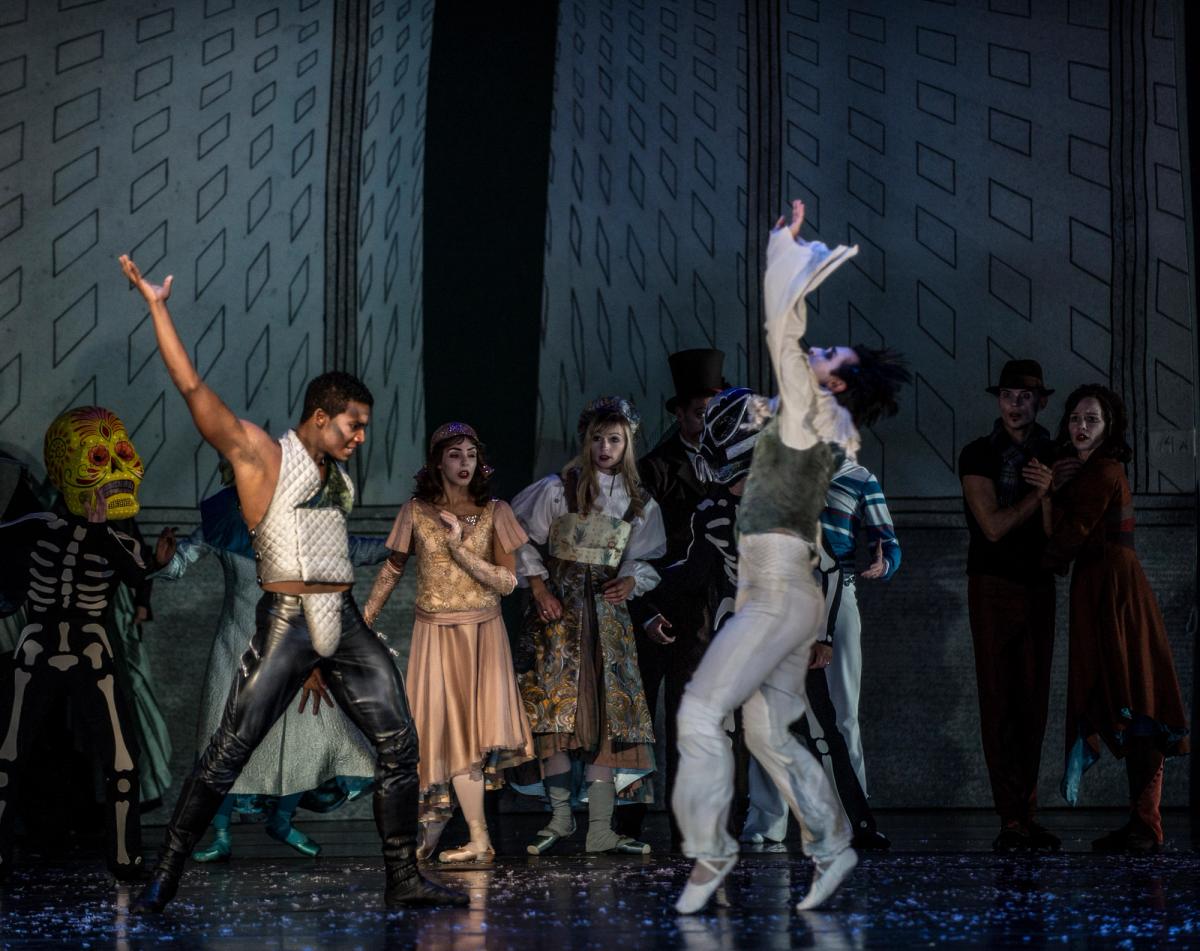
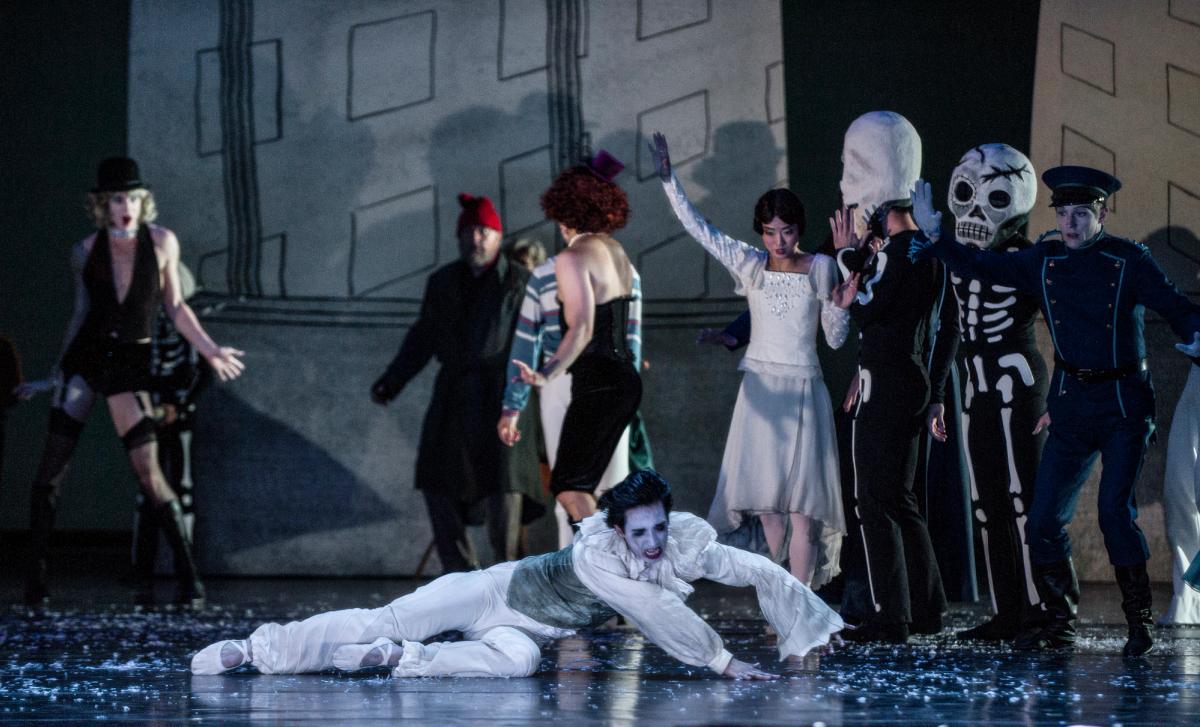
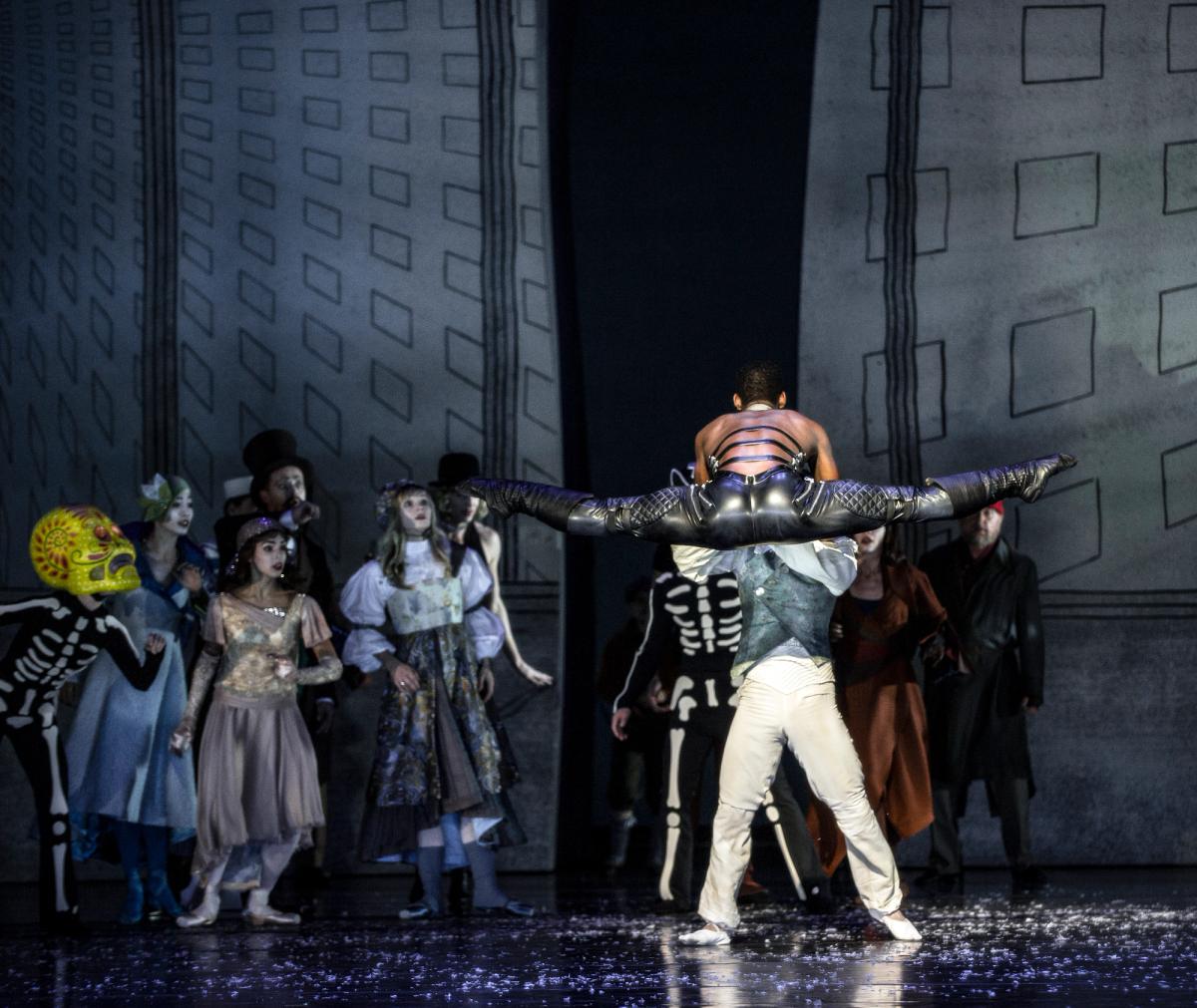
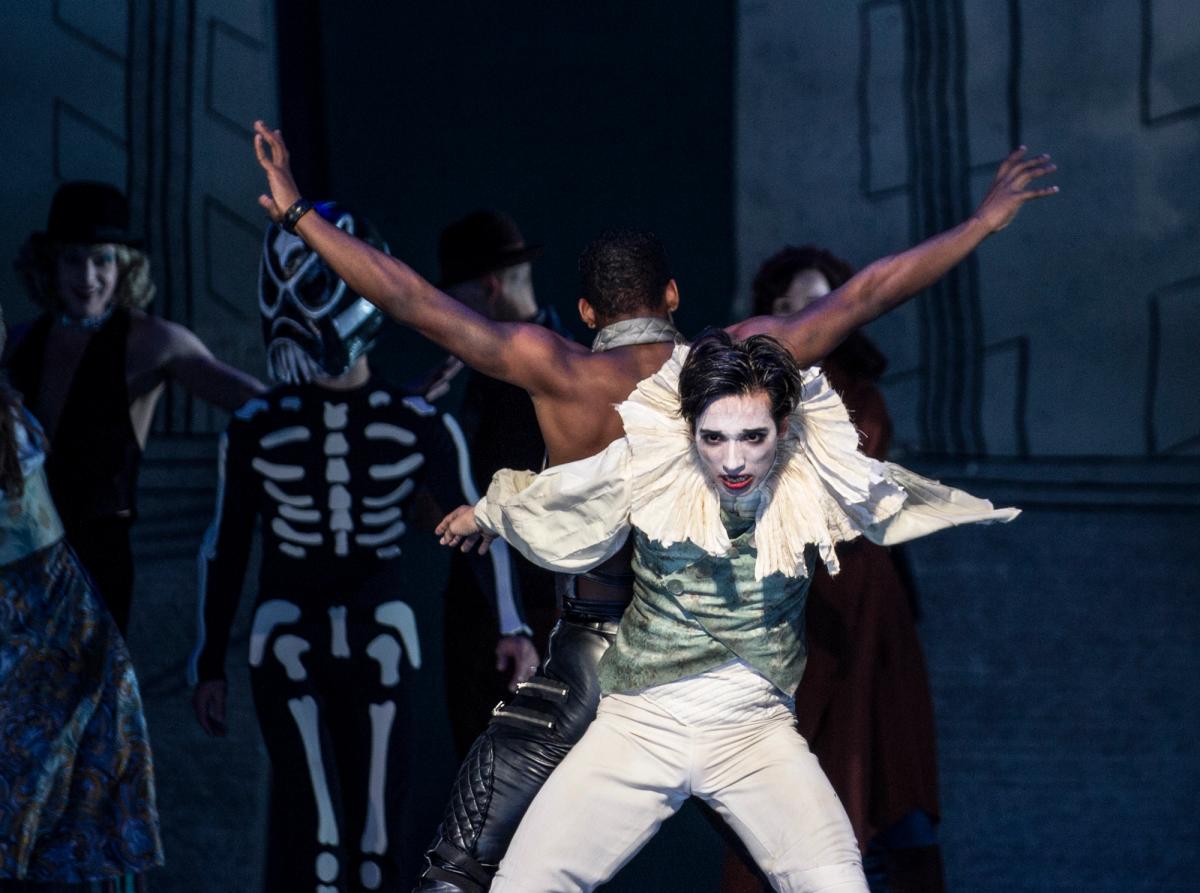
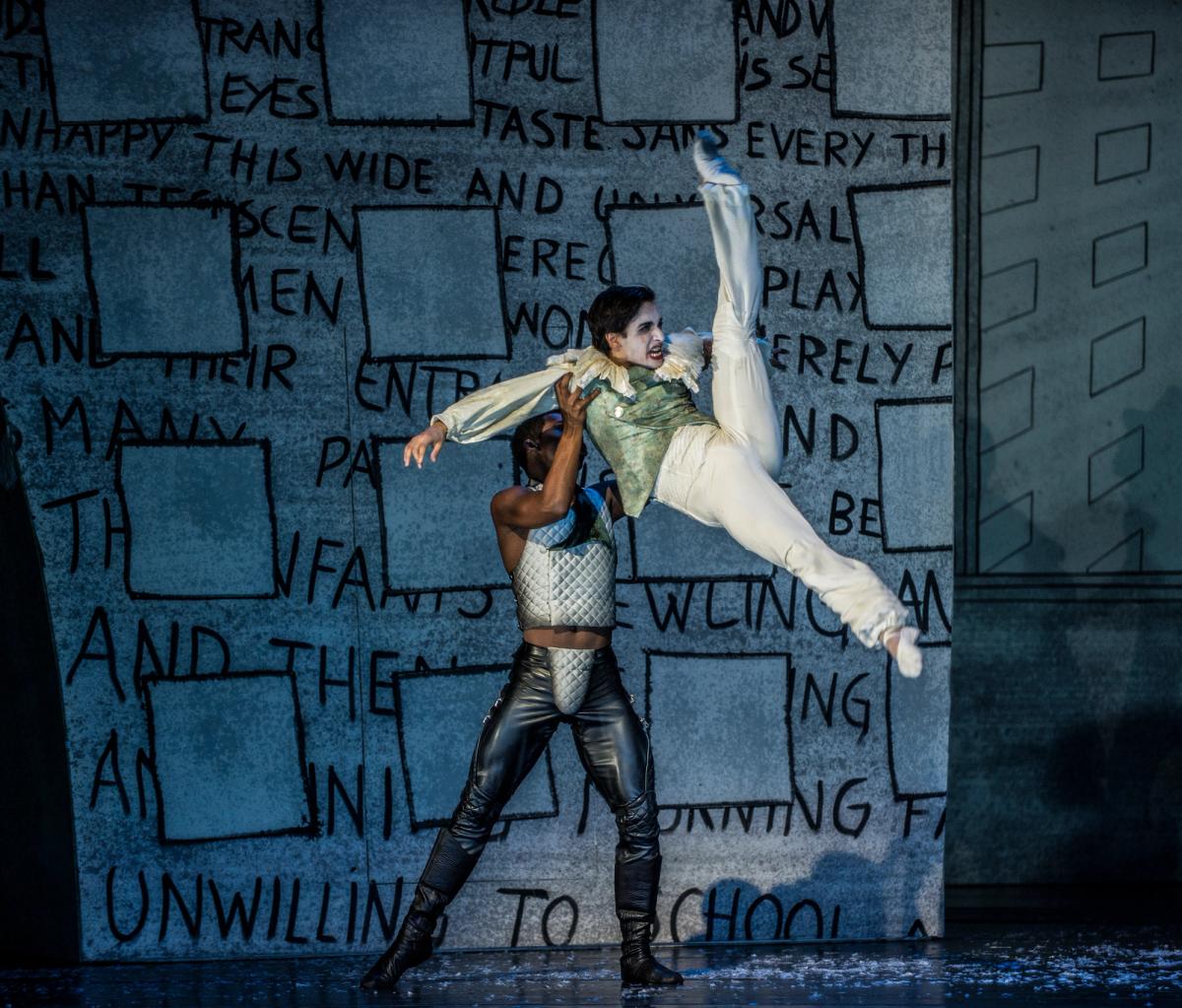
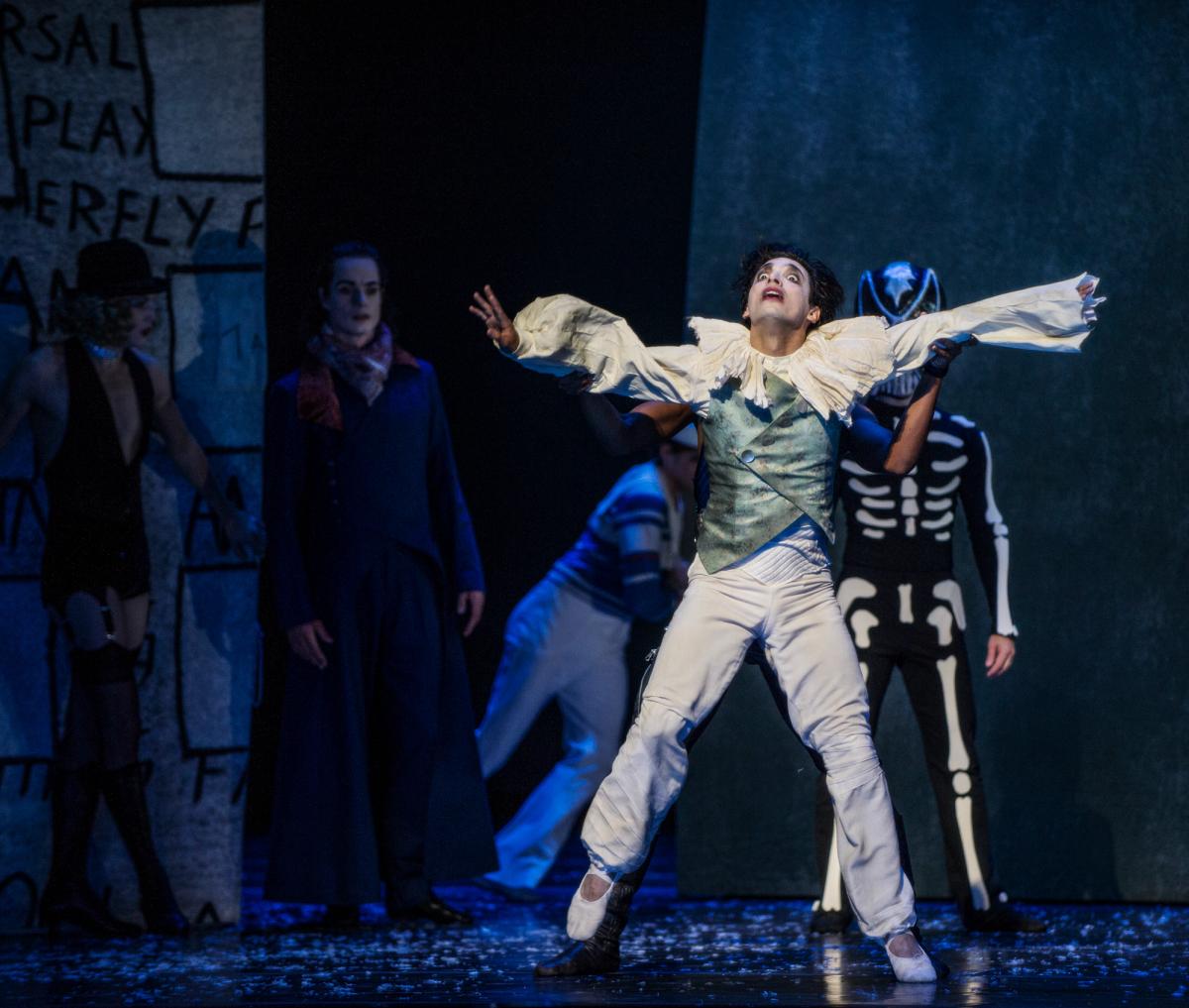
Where Fokine filled his square with the Russian types of 1850, Øyen fills a whole city, Admiral City, with a cross-section of the world: young lovers and a funeral procession, the rich and the poor, the devout and the faithless, bridesmaids and sailors, drag queens. Timeless on purpose, somewhere between My Fair Lady and Blade Runner, it is a place where everyone wants to be loved and no one is quite sure what it means to be real.
At its heart is a theatre within the theatre. The Charlatan is no longer a fairground magician but the puppeteer of the whole masked ensemble, part Geppetto, part director, part God. Petrushka is his first puppet and the first-born son he never had, a Pinocchio who wants only to be real, loved for his lifelike resemblance and hated for being fake. The Ballerina is his second prototype, her human feeling smoothed away; the Moor is the last, and the Moor is death.
Petrusjka is not a fairytale. It is a worldview, an abstraction of society, of God and of Man.
The original Petrushka was a breaking point into modernism, groundbreaking in its music, its design and its story. The ambition of this version was as simple as it was large: to make the piece today what the Ballets Russes original had been in 1911.